Same designer, different doorway. Who’s reading?
I design products and the systems underneath. Same hand, both ends.
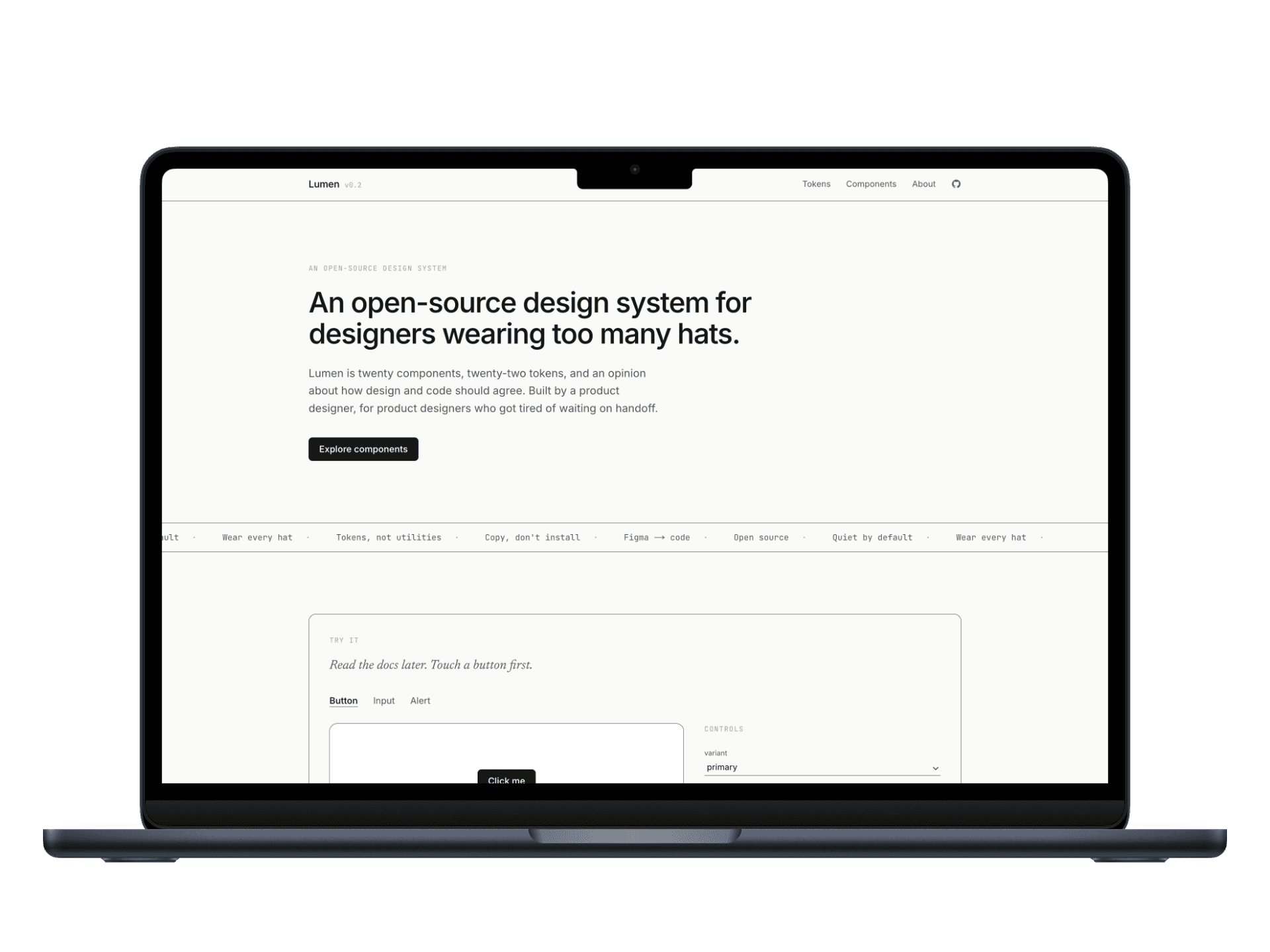
I built an open-source design system that makes Figma and code finally agree.
Twenty components, twenty-two tokens, and one opinion about how design and code should speak the same language. Free, and staying that way.
View case study→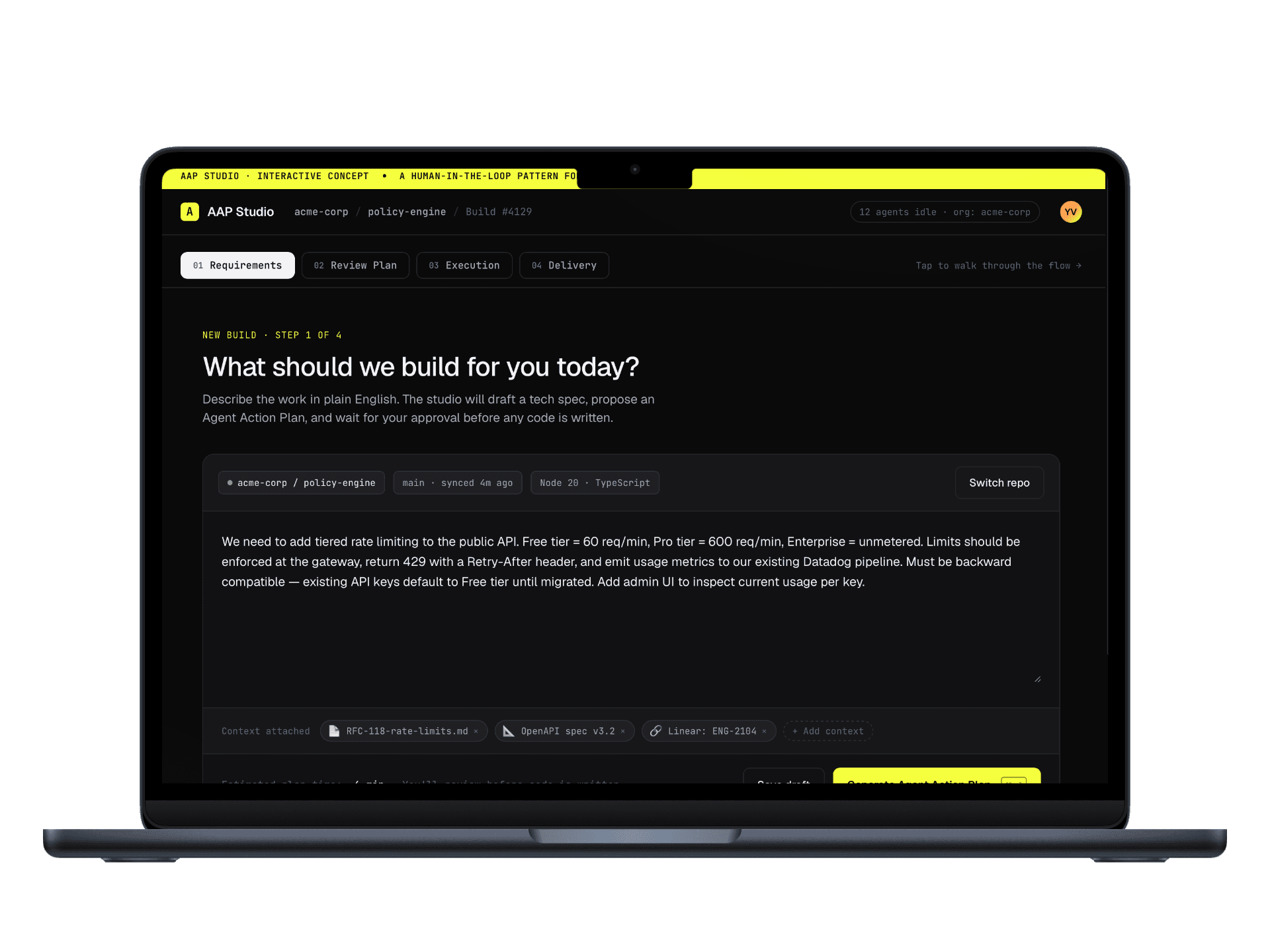
I prototyped a studio where you approve an AI coding agent's plan before it writes a single line of code.
An autonomous agent is only useful if you trust it. This is the review layer that earns the trust, read the plan, approve it, then let it build.
View case study→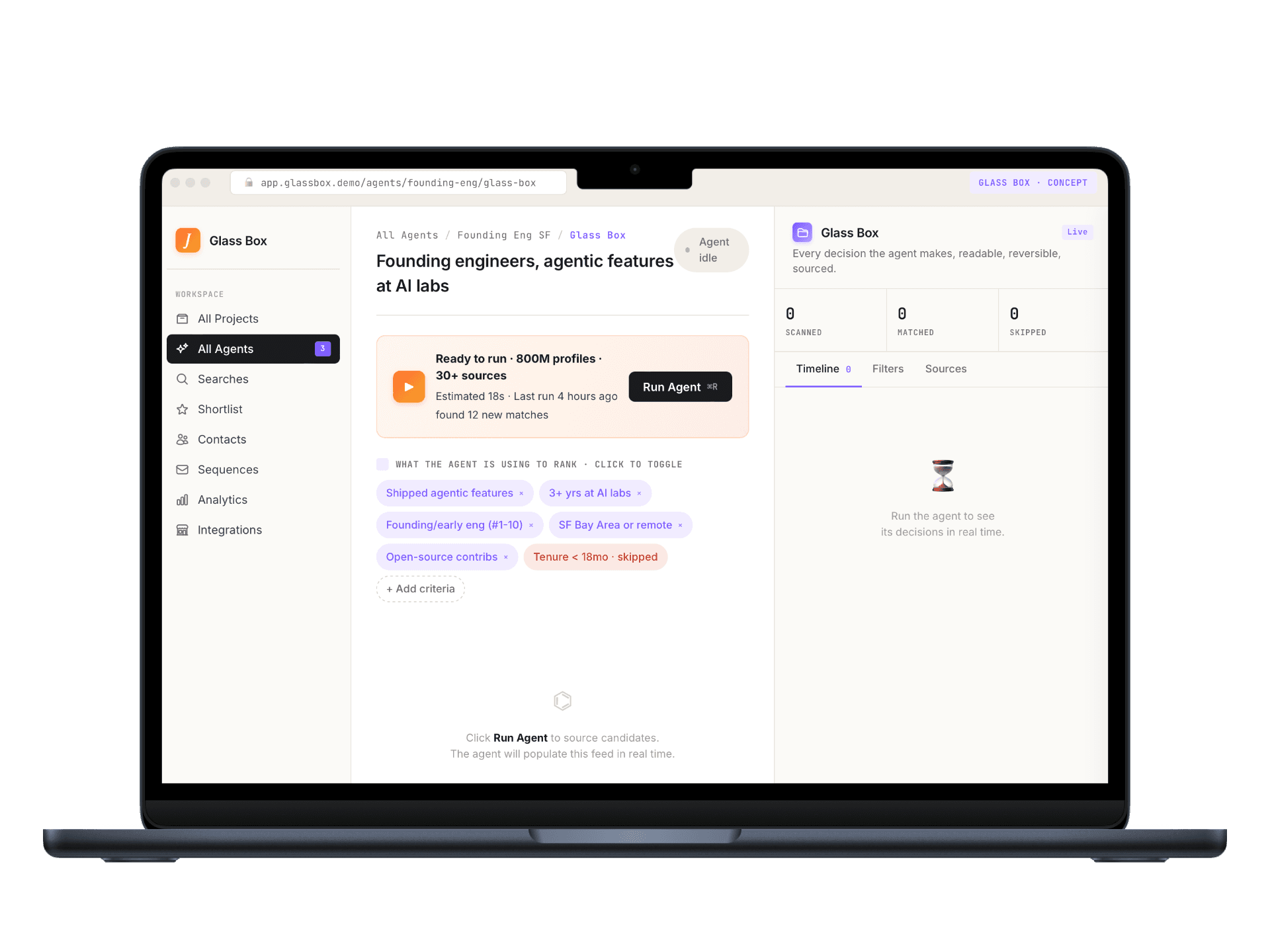
I shipped a live tool that turns an AI agent from a black box into a glass one.
People bet real decisions on what an agent did overnight. Glass Box makes every move readable, reversible, and sourced, without needing to read code.
View case study→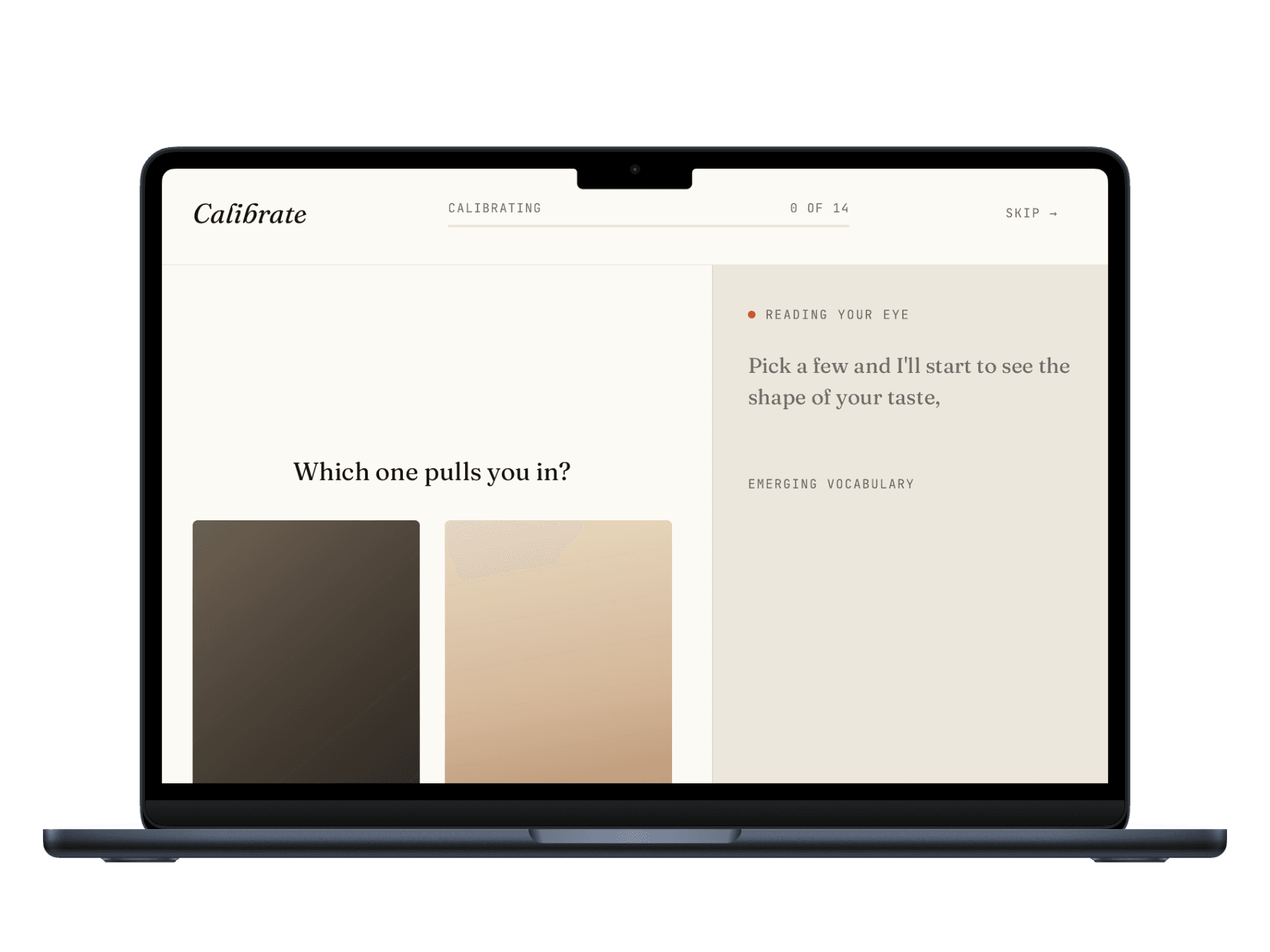
I designed and coded onboarding that reads your taste in 60 seconds, no form required.
The first minute shouldn't teach the product; it should recognize the person. Calibrate tunes the feed by watching what you choose.
View case study→The things I actually care about, past making it pretty.
EMPATHY
Start with people, not pixels
I learn the real need before I open Figma.
AI COLLABORATION
Human intuition, machine speed
I let AI handle the tedious so judgment goes where it counts.
SYSTEMS
Build once, use everywhere
One good decision should show up across the whole product.
ACCESS
For everyone, or it's not done
Inclusivity is the foundation, not a feature.